


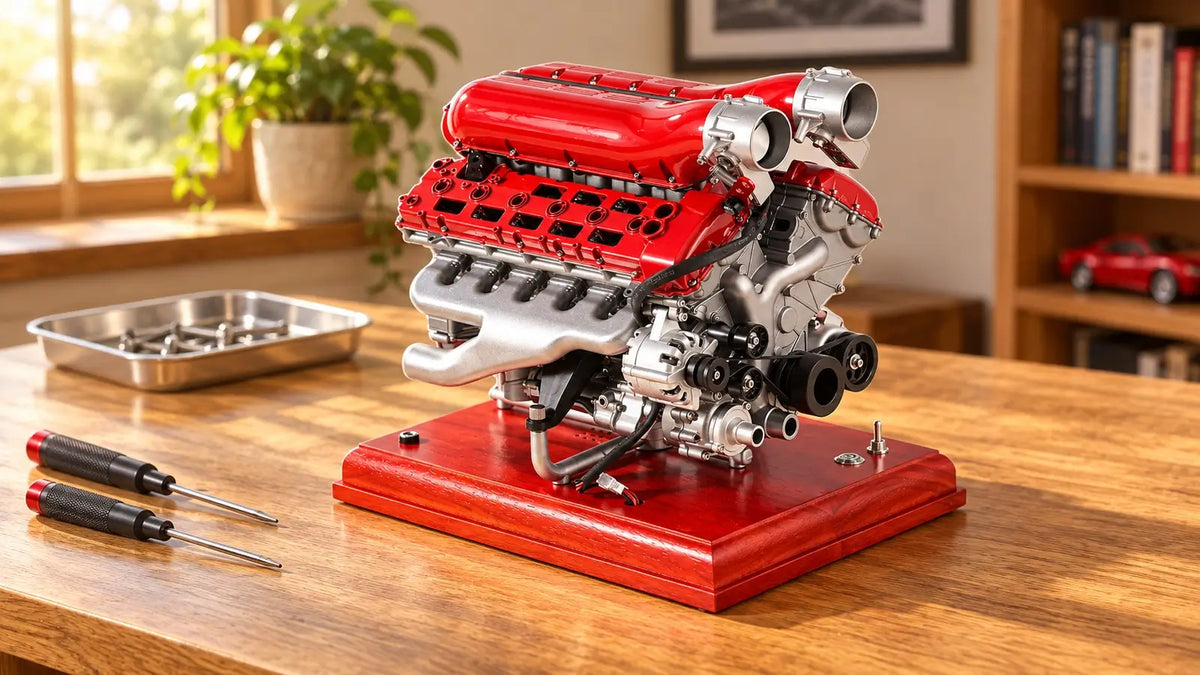
The TECHING DM108 metal V12 engine model kit is an 800+ piece, 1/4-scale mechanical build powered by an internal electric motor rather than fuel. Designed for experienced model builders, automotive enthusiasts, and STEM learners, it lets you assemble a working 12-cylinder valvetrain, crankshaft, and serpentine belt system on a solid wooden base—without glue, soldering, or messy fuel.
Before spending nearly $900 on a flagship mechanical kit, it helps to look beyond photos and check how the drive system actually works, how difficult the assembly is, and whether the V12 or a smaller V8 fits your workbench better. This guide walks through every detail.
TECHING DM108 Specifications at a Glance
| Model & Scale | TECHING DM108 — 1/4-Scale Supercar V12 |
|---|---|
| Piece Count | 800+ precision metal parts |
| Materials | Anodized aluminum alloy, zinc alloy, stainless steel + solid cherry-red wood base |
| Assembled Size | 10.0×7.5×8.5" (25.5×19×21.5cm) |
| Package Size | 14.4×13.5×10.1" (36.6×34.2×25.6cm) |
| Weight | 11 lbs (5 kg) assembled • 16.8 lbs (7.62 kg) boxed |
| Power & Battery | 3.7V 800mAh lithium battery (DC 5V USB cable included; ~6h charge for ~20 min run) |
| Assembly & Age | 6+ hours (5/5 difficulty) • Recommended ages 16+ |
You can check current stock and full gallery photos on the TECHING DM108 product page.
How a V12 Engine Works (and What the DM108 Shows)
In real automotive engineering, a 60-degree V12 pairs two inline-six cylinder banks sharing a single crankshaft. Because a piston fires every 60 degrees of crankshaft rotation, the primary and secondary rocking forces cancel each other out naturally—which is why classic supercars use V12 layouts for smooth power delivery without balance shafts.
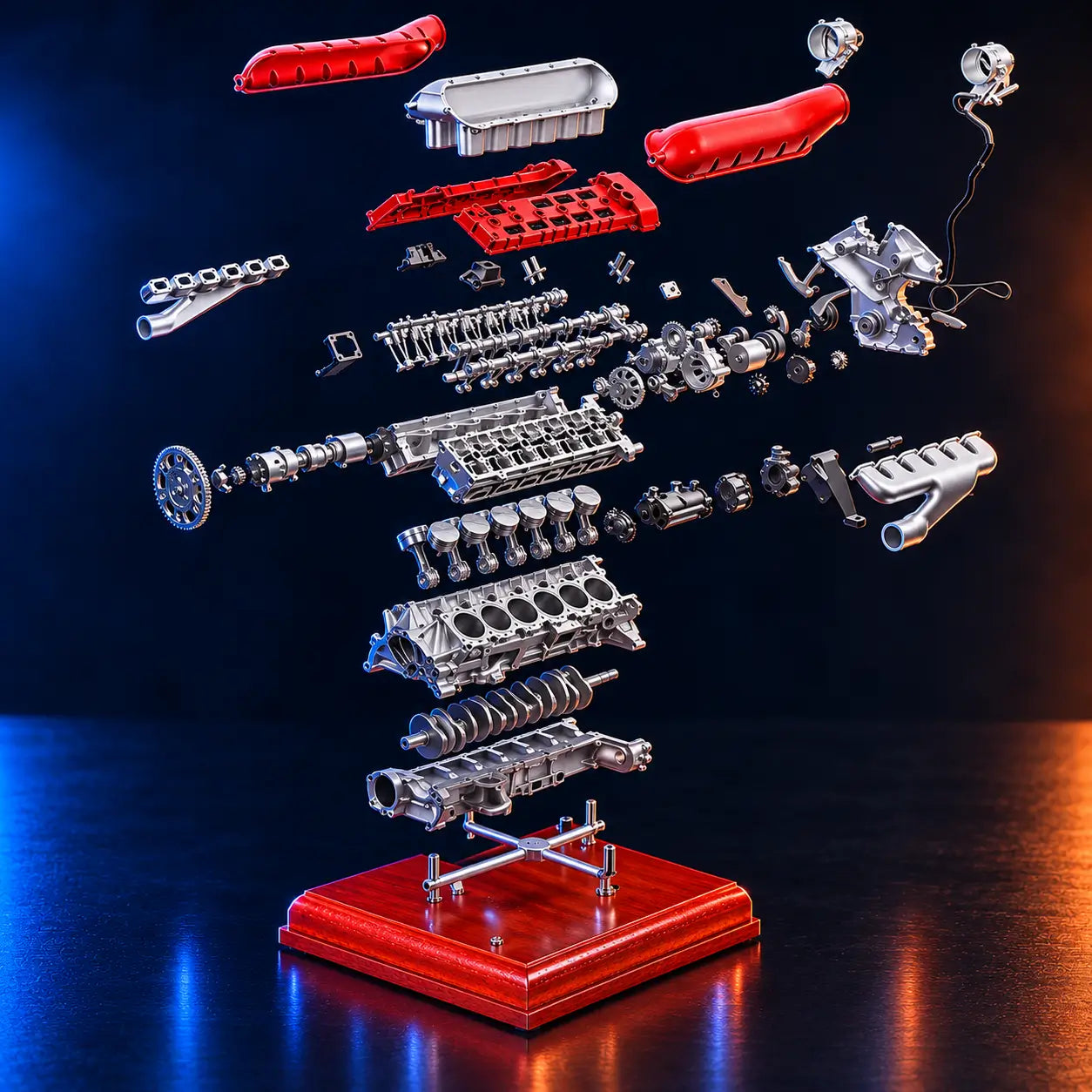
When you build the DM108, you assemble those working layers in order rather than snapping decorative shells together:
- Lower rotating assembly: Install the machined crankshaft inside the cast crankcase, then attach all 12 connecting rods and pistons into their numbered cylinders.
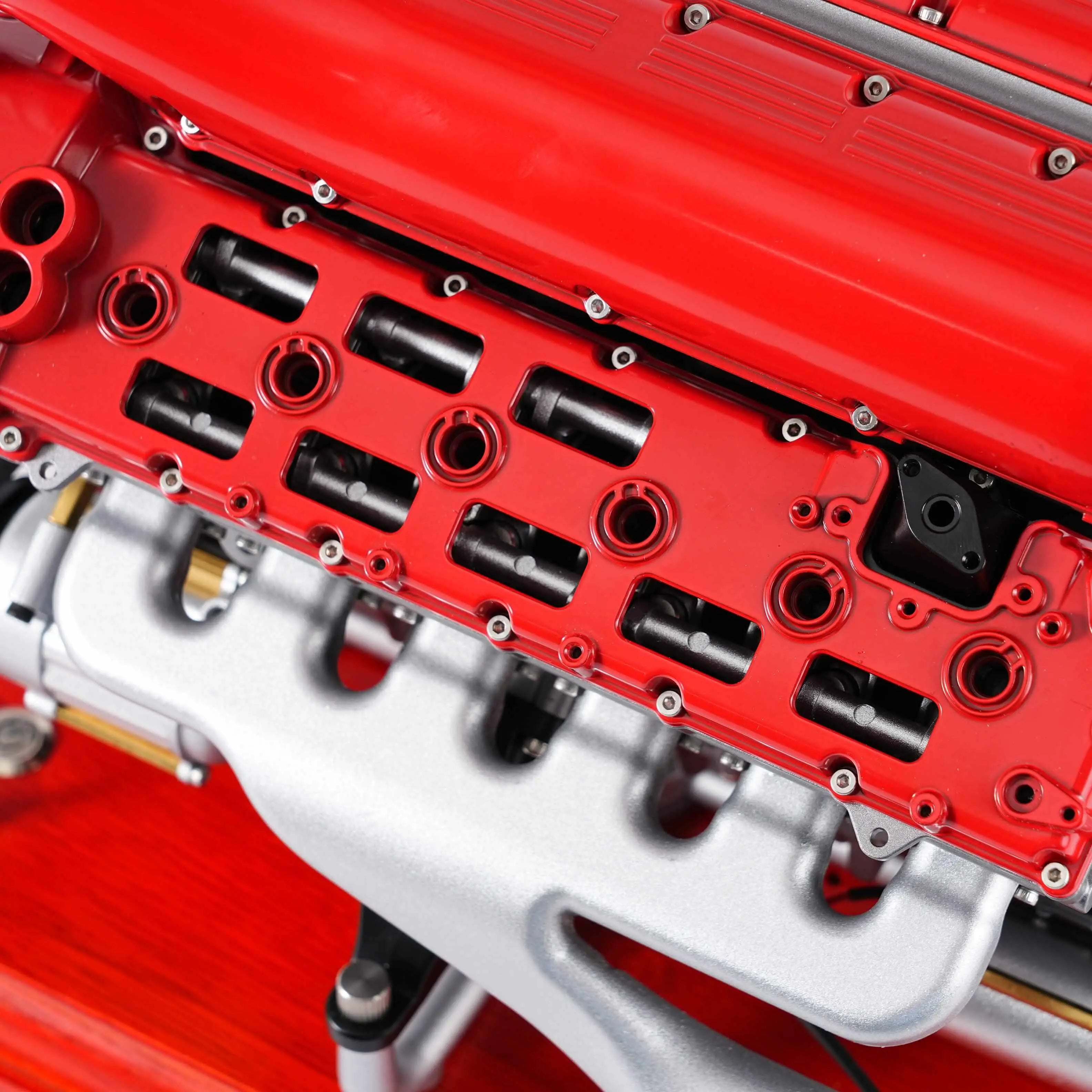
- Upper valvetrain & timing: Align the dual overhead camshafts and timing chains so the valves stay synchronized with piston top-dead-center—visible later through the cutaway crimson cylinder heads.
- Front accessory drive: Fit the vented silver aluminum alternator, machined pulleys, and ribbed serpentine belt across the timing cover.
Electric Drive vs. Gas Engine Kits: Honest Trade-Offs
Engine model kits fall into two categories: fuel-burning nitro/gasoline models and dry electric-drive demonstration models. Knowing the difference prevents disappointment after unboxing.
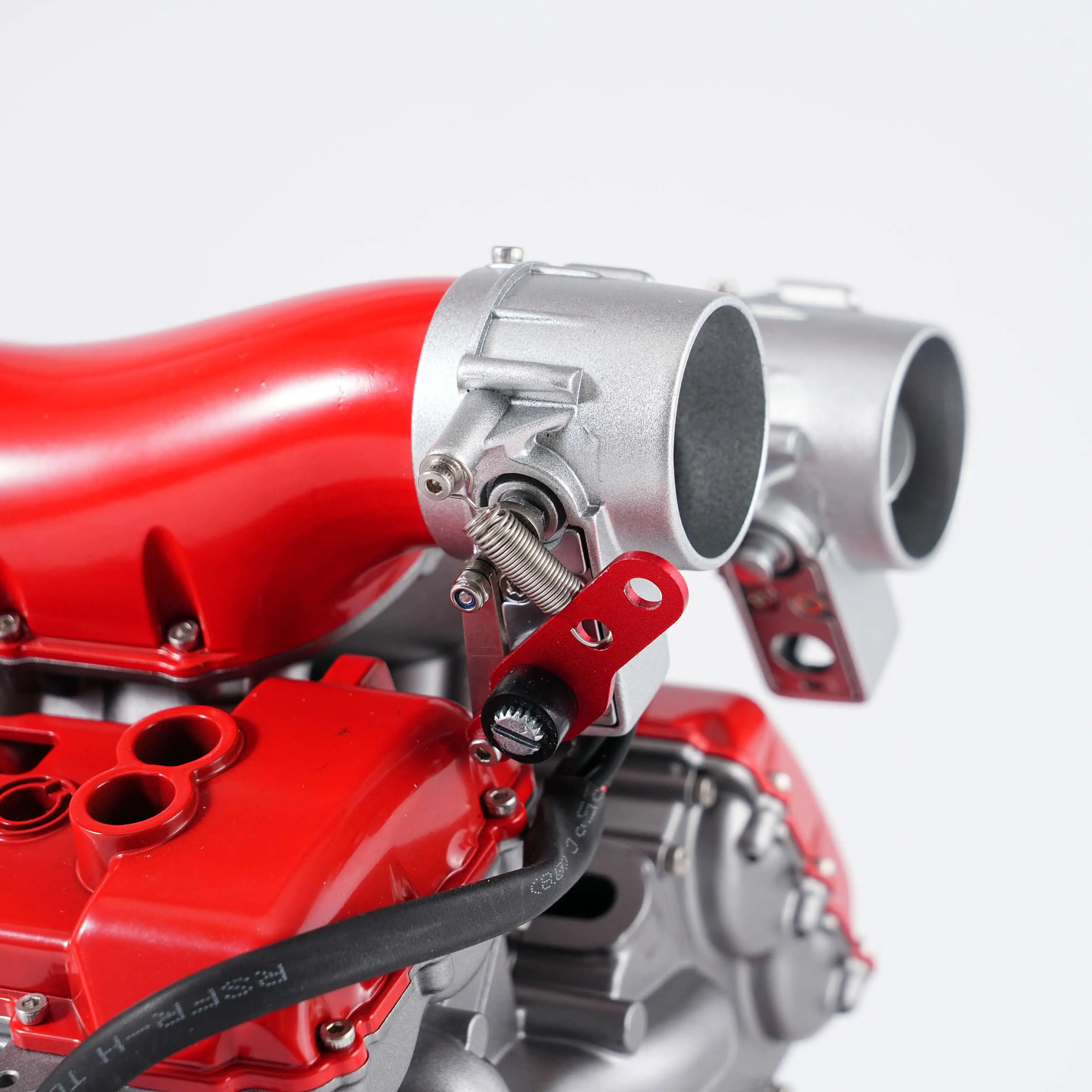
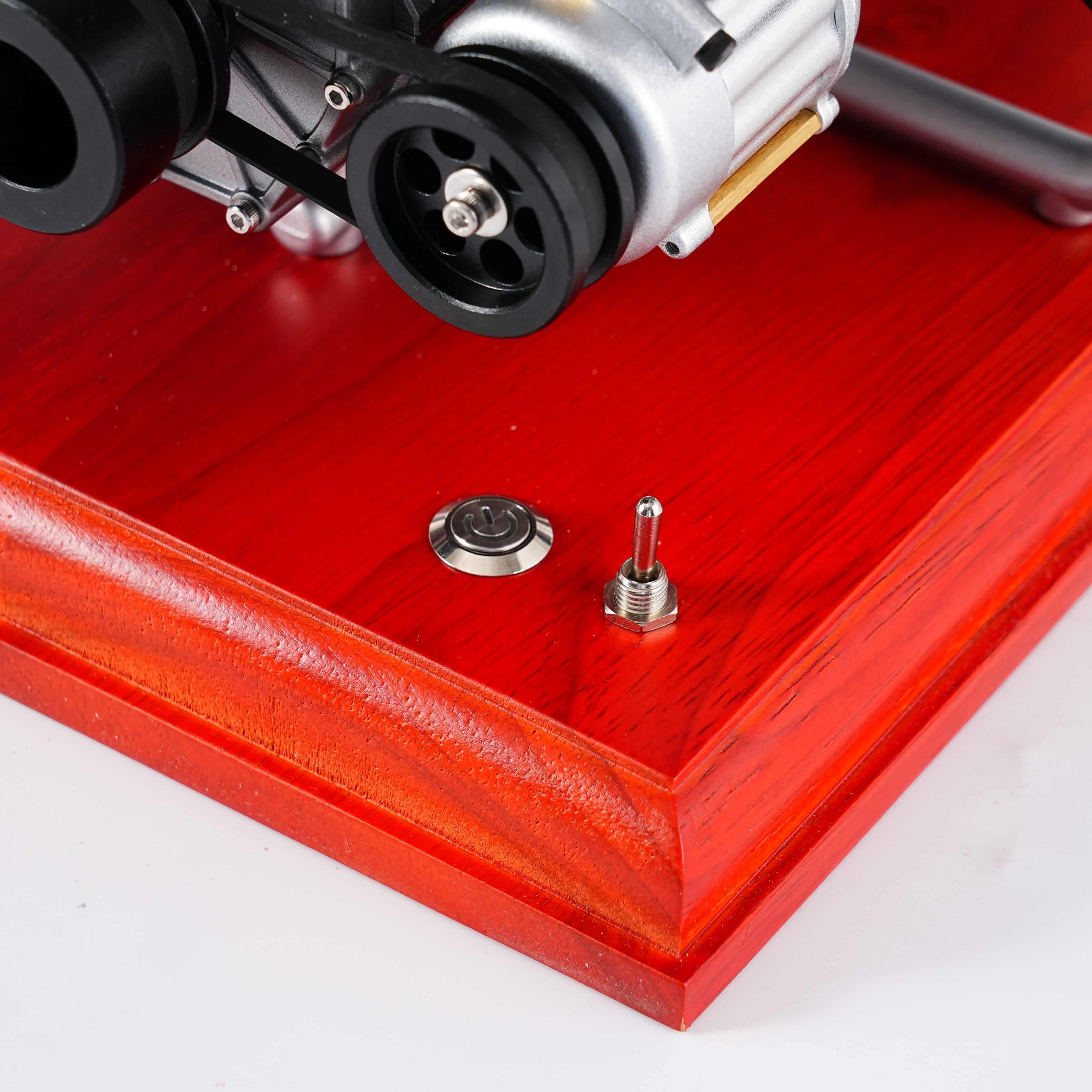
The TECHING DM108 is strictly a dry electric-drive kit. A concealed electric motor powers the rear flywheel and turns all mechanical assemblies, while a toggle switch and spring-loaded throttle linkage trigger V12 sound effects from a speaker built into the wooden base.
What you gain with electric drive: You can run it safely indoors on an office desk or living-room shelf with one press of a button—no glow plugs, fuel mixing, oil leaks, heat, or outdoor exhaust.
The trade-off to know upfront: Sound comes from an integrated speaker rather than real combustion, and the 3.7V 800mAh lithium battery runs for roughly 20 minutes per full charge (after about 6 hours of USB charging). If you want loud exhaust smoke and mechanical break-in maintenance, look for a nitro kit; if you want a clean desktop demonstration piece you can switch on anytime for visitors, electric drive is far more practical.
Skill Level, Build Time, and Practical Workshop Tips
With 800+ parts and a 5/5 difficulty rating, plan for 6+ hours of assembly—many builders spread it across two or three relaxed weekend sessions (8 to 12 hours total) rather than rushing in one evening. No prior engineering degree is required, and the full-color illustrated manual labels each step clearly, though patience with small hex screws is essential.
Four habits make the assembly noticeably smoother:
- Charge and test the electronics first: Before locking down the lower block and wooden stand, plug in the DC 5V USB cable (use your own standard 5V USB wall adapter) and verify the motor, toggle switch, and speaker respond normally.
- Use a magnetic dish for fasteners: With hundreds of small stainless screws across both cylinder banks, keeping a magnetic parts tray next to the numbered bags prevents dropped or mixed-length bolts.
- Never force aluminum threads: Anodized aluminum alloy looks crisp, but cross-threading happens if you drive a screw at an angle. Start bolts gently by hand before tightening snug—do not over-torque.
- Hand-spin the crank at every stage: Rotate the front pulley or rear flywheel manually after installing pistons, chains, and covers. If you feel sudden resistance, back up one step and check alignment before power-testing.
What Is Inside the Four EVA Foam Trays
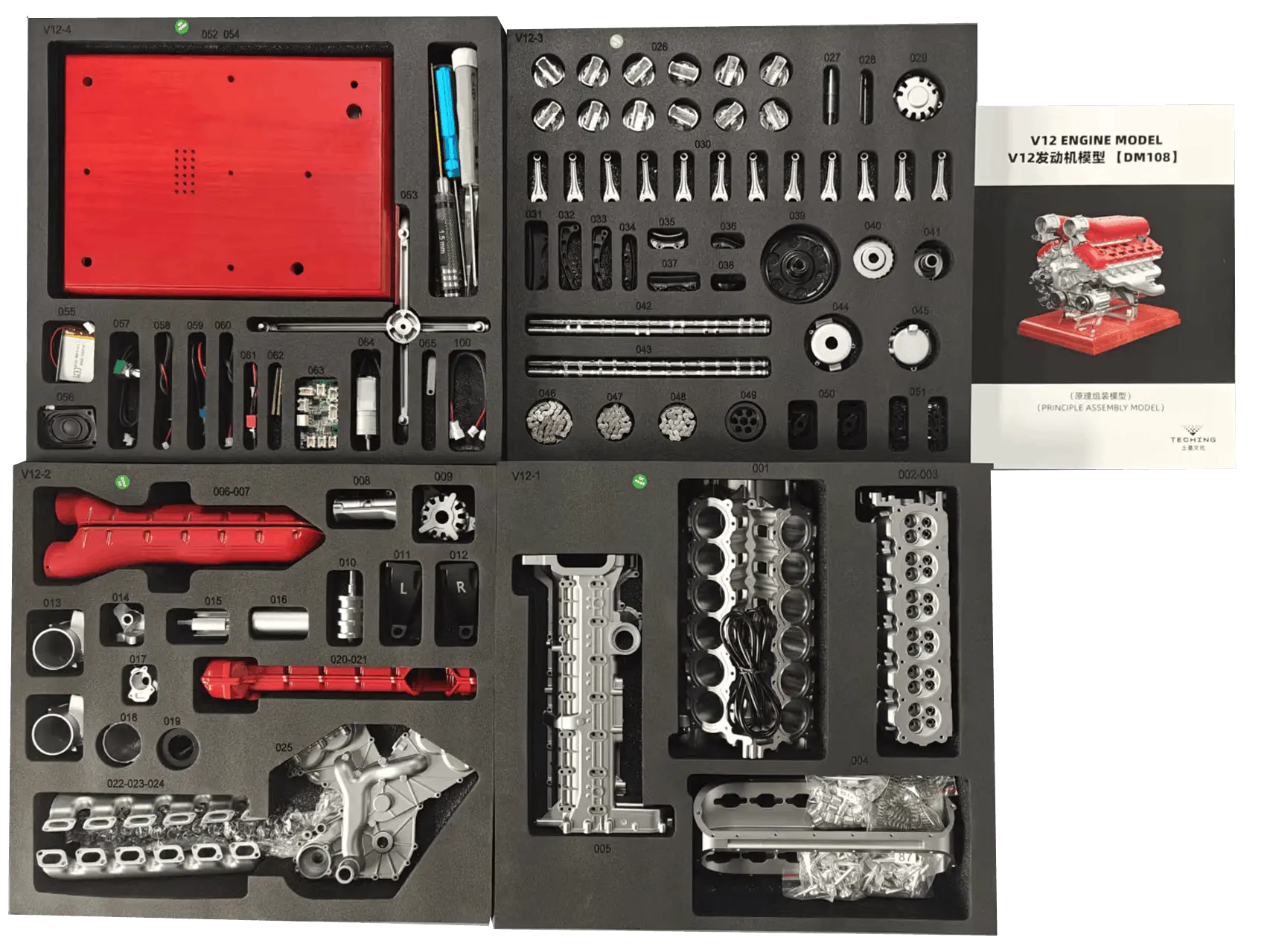
Everything ships in a rigid presentation box measuring 14.4×13.5×10.1" (36.6×34.2×25.6cm) and weighing 16.8 lbs (7.62 kg). Inside, four custom-cut EVA foam trays separate the castings, fasteners, wooden base, precision hex screwdrivers, wrenches, USB cable, and illustrated manual so nothing scratches in transit.
One small maintenance note for collectors: if you plan to store the model unused for more than three months, keep the battery periodically topped up according to the manual so the lithium cell stays healthy.
TECHING DM108 V12 vs. DM118 V8: Which Should You Build?
Not sure whether to start with TECHING’s V8 or jump straight to the flagship V12? Compare both metal kits side by side:
| Feature | TECHING DM108 (V12) | TECHING DM118 (V8) |
|---|---|---|
| Pieces & Scale | 800+ parts • 1/4 scale | 500+ parts • 1/3 scale |
| Assembled Size | 10.0×7.5×8.5" (25.5×19×21.5cm) | 7.8×6.7×7.1" (19.8×17×18cm) |
| Build Time | 6+ hours (5/5 difficulty) | ~5 hours (4/5 difficulty) |
| Sound & Stand | Cherry-red wood base + throttle sound module | Integrated metal frame (no sound module) |
| Recommended Age | 16+ | 14+ |
| Price | $899.99 (reg. $1,099.99) | $699.99 |
If this is your first metal engine build and you want a more forgiving weekend project under $700, the TECHING DM118 V8 is a strong starting point. If you specifically want a flagship V12 silhouette, synchronized throttle sound, and the cherry-red wood presentation base, the DM108 is worth the step up.
Final Buying Checklist
- Check shelf strength: Reserve at least 10.0×7.5×8.5" (25.5×19×21.5cm) on a sturdy surface—at 11 lbs (5 kg), the DM108 is substantially heavier than plastic display models.
- Keep a 5V USB wall plug handy: The charging cable is included, while a standard USB power brick is supplied by you.
- Verify after-sales coverage: Kits ordered directly from Toys Quiz include free shipping over $65, 30-day returns on unopened items, and free replacement-part support if any piece arrives missing or damaged out of the box.
Ready to Build the TECHING DM108 V12?
Available now at $899.99 (compared to $1,099.99 regular price — saving $200) with free shipping and free replacement-part support.
View TECHING DM108 V12 or browse all 3D Metal Puzzles


Toys Quiz Team
The Toys Quiz Team creates practical guides for model builders, miniature collectors, and curious makers. We compare creative kits, explain important features, and share clear building tips to help every hobbyist choose a rewarding project.
Toys Quiz is a creative lifestyle company dedicated to designing and developing 3D puzzles, toys, and wooden handicrafts. Subscribe to learn more.



Leave a comment
This site is protected by hCaptcha and the hCaptcha Privacy Policy and Terms of Service apply.