
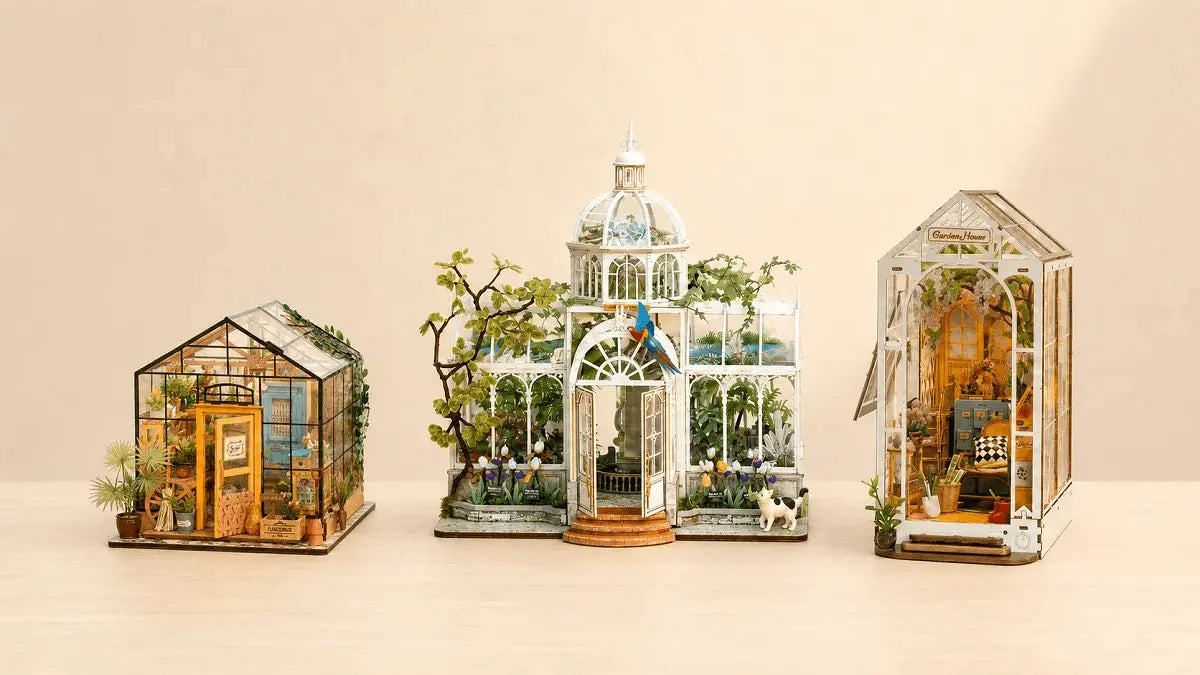
Miniature greenhouse kits bring together model building, gardening-inspired design, and the satisfaction of creating a display piece by hand. Instead of caring for real plants, you assemble a tiny botanical world filled with flowerpots, shelves, tools, furniture, transparent panels, and warm lighting. The result is a relaxing craft project that can brighten a desk, bookcase, or creative corner.
This guide focuses on the best miniature greenhouse kits currently listed in the Toys Quiz catalog, followed by practical advice for choosing, building, and displaying your model. Whether you are buying your first DIY miniature greenhouse or looking for a more detailed project, the comparisons below will help you choose with confidence.
In this article
- What is a miniature greenhouse kit?
- Quick comparison of our top picks
- Best miniature greenhouse kits at Toys Quiz
- Miniature greenhouse design inspiration
- How to choose the right kit
- What to check before you start
- Tips for a cleaner, stronger build
- How to display and care for your miniature
- Frequently asked questions
- Conclusion
What Is a Miniature Greenhouse Kit?
A miniature greenhouse kit is a small-scale craft set that lets you build a decorative greenhouse, conservatory, flower shop, garden room, or plant-filled diorama. Depending on the design, the kit may combine wood, paper, plastic, fabric, wire, transparent panels, imitation plants, miniature furniture, and an LED lighting system.
These are display models rather than working greenhouses for growing live plants. Their appeal comes from the building process and the finished scene: tiny leaves are arranged, pots are positioned, shelves are filled, and individual components gradually become a complete botanical space.
Adult hobbyists often choose these kits for mindful, screen-free crafting. They can also make thoughtful gifts for plant lovers, miniature collectors, model builders, and anyone who enjoys detailed hands-on projects. Teen builders may enjoy them too, but the small components and electrical details make adult guidance important.
Quick Comparison of Our Top Picks
| Kit | Best for | Design character | Format |
|---|---|---|---|
| Cathy's Flower House | Classic greenhouse detail | Plant-filled glasshouse | Freestanding miniature house |
| Blooming Tea Garden | A lighter garden-and-tea theme | Bright seating area with greenery | Freestanding miniature scene |
| Holiday Garden House | Bookshelf display | Arched garden passage with lights | Book nook |
| Fancy Tea Yard | Compact decorative crafting | Outdoor tea garden and pergola | Open miniature garden |
Availability note: The shopping links in this guide are limited to products verified in the Toys Quiz catalog when this article was prepared. Product availability can change.
Best Miniature Greenhouse Kits at Toys Quiz
1. Cathy's Flower House: Best Classic Miniature Greenhouse
If your idea of a perfect miniature greenhouse includes transparent walls, abundant plants, gardening tools, storage furniture, and tiny decorative objects, Cathy's Flower House DIY Miniature Kit is the strongest all-around choice. It captures the pleasantly busy appearance of a well-used conservatory, where every shelf and work surface contributes to the scene.

This kit suits builders who enjoy detailed work and want the unmistakable look of a traditional glasshouse. The mixture of greenery, furniture, containers, and tools creates visual depth from several viewing angles. Because the interior includes many small elements, the project rewards a patient approach: prepare similar parts together, let glued pieces dry fully, and arrange the final accessories only after the main structure is stable.

Choose it if: you want a recognizable DIY miniature greenhouse with dense botanical detail and a freestanding display format.
2. Blooming Tea Garden: Best for a Bright Garden Retreat
The Blooming Tea Garden DIY Miniature House Kit combines a plant-filled setting with the welcoming atmosphere of an outdoor tea area. Instead of concentrating every detail into a traditional potting greenhouse, the design makes room for seating, décor, and an airy social space.

It is a good match for crafters who prefer a cleaner, brighter scene while still wanting plenty of greenery. The light-colored furniture helps the plants stand out, and the garden-room layout feels decorative without becoming visually crowded. It can work particularly well on a shelf with other cozy room miniatures.
Choose it if: you like greenhouse themes but prefer a relaxed tea-garden atmosphere over a densely packed gardener's workspace.
3. Holiday Garden House: Best Greenhouse-Style Book Nook
A book nook is designed to sit between books, so it delivers depth without requiring the same shelf width as many freestanding dollhouses. The Rolife Holiday Garden House DIY Book Nook Kit uses an arched greenhouse structure, miniature plants, and LED illumination to create a garden passage that draws the eye inward.

This is the most suitable option in the group for readers and anyone with limited display space. The enclosed format helps protect interior details from accidental contact, while the narrow perspective makes the scene feel deeper than its footprint suggests. Place it between hardback books or alongside neutral décor so the illuminated garden remains the focus.
Choose it if: you want botanical shelf décor and prefer a book nook to a traditional miniature house.
4. Fancy Tea Yard: Best Compact Open Garden Scene
The Rolife Fancy Tea Yard DIY Miniature House is not a closed glasshouse. It is a compact garden-themed scene built around a pergola, a tea setting, potted plants, and a restful outdoor mood. That makes it a useful alternative for shoppers who love miniature gardens but do not necessarily want a greenhouse enclosure.

The open layout makes the small décor easy to see, and the combination of greenery, seating, and serving details gives the scene a clear story. It is a good choice for a desk, small shelf, or gift recipient who enjoys tea, gardens, and decorative craft projects.
Choose it if: you want a smaller garden display with an open view and a cheerful afternoon-tea theme.
Miniature Greenhouse Design Inspiration
The following scenes are included as visual inspiration rather than Toys Quiz shopping recommendations. They show four useful design directions to consider when comparing any miniature greenhouse kit.
Flower-Shop Greenhouse Layout

A storefront-style greenhouse creates a stronger sense of story than a structure filled only with plants. Look for a clear entrance, exterior planters, signs, display shelves, and a color palette that separates the architecture from the greenery. This format is appealing if you want the finished model to feel like part of a miniature street.
Bright Glasshouse Layout

A white or pale greenhouse frame gives the model an airy, contemporary appearance. Large transparent surfaces let you see more of the interior, but they also make fingerprints, excess glue, and misaligned panels more noticeable. If you choose this style, clean transparent pieces before assembly and handle them by the edges whenever possible.
Courtyard and Fountain Layout

A courtyard layout spreads visual interest across paths, planters, architectural edges, and a central feature such as a fountain. It can be easier to appreciate from above than a fully enclosed greenhouse. Before buying this type of model, check the finished footprint carefully because open garden scenes can occupy more horizontal space.
Cozy Enclosed Garden Room

An enclosed garden room balances the greenery of a greenhouse with the furniture and comfort of a tiny home. This is a good direction for builders who enjoy storytelling: a chair, worktable, lamp, and collection of plants can suggest who uses the room and why. Look for an open side or generous windows so the interior remains visible after assembly.
How to Choose the Right Miniature Greenhouse Kit
Choose the Display Format First
Decide where the completed model will live before comparing decorative details. A freestanding greenhouse can be viewed from several angles but usually needs more shelf depth. A book nook uses vertical space efficiently and fits between books. An open garden gives you the clearest view of the interior but exposes delicate parts to dust and contact.
Measure the available width, height, and depth. Leave a little extra room for lifting the model, changing batteries, or reaching a switch. Finished dimensions are more useful than package size when planning a display.
Match the Detail Level to Your Patience
A model with dozens of flowerpots, stems, containers, paper objects, and tools can look impressive, but it will also involve more repetitive preparation. A less crowded garden scene may be better for a first build or for someone who wants a shorter project. Product photos are useful here: count the kinds of repeated objects and consider whether you would enjoy making them.
Check the Materials and Assembly Method
Miniature kits may use pre-cut wood, printed paper, plastic parts, fabric, wire, and transparent sheets. Some components slot together, while others need careful gluing, folding, shaping, or wiring. Read the product page and instructions before starting so you know which tools and adhesives are required.
Consider Lighting
LED lighting changes a miniature greenhouse dramatically, especially when transparent walls reflect a warm glow. If lighting matters to you, confirm whether the system is included, which battery type it requires, where the switch sits, and whether the battery compartment will remain accessible after the build.
Think About Viewing Angles
A front-facing kit works well in a bookcase, while a glasshouse with finished sides can sit in the center of a shelf or on a desk. Consider which details will remain visible from your normal eye level. A beautiful roof is easily missed on a high shelf, while a floor-heavy scene may be difficult to appreciate below eye level.
Check Age Guidance and Small-Parts Safety
These kits contain small pieces and are not suitable for young children. Follow the age guidance on the product page and packaging. If a teen is building the kit, an adult should supervise the use of adhesives, cutting tools, wires, and batteries.
What to Check Before You Start
Open the package on a clear table and compare the contents with the parts list before gluing anything. Sort pieces into labeled trays or small containers, keeping transparent panels separate so they do not become scratched. Read the full instructions once, even if you are eager to begin; knowing when the walls, wiring, and roof are installed can prevent difficult rework later.
Depending on the kit and shipping destination, glue, paint, or batteries may not be included. Check the product notes instead of assuming every consumable is in the box. A basic miniature-building setup often includes:
- A suitable clear-drying craft adhesive
- Fine-point tweezers
- Small scissors or the recommended cutting tool
- A metal ruler and cutting mat, if required
- Toothpicks for controlled glue application
- Small containers for sorted parts
- A soft, lint-free cloth for transparent panels
- The correct batteries for any lighting system
Use only tools and adhesives recommended by the manufacturer. Protect your work surface, keep the space ventilated when using glue, and store small pieces away from children and pets.
Tips for a Cleaner, Stronger Build
Work in Short Sections
Complete one logical group at a time, such as a shelf, plant set, or piece of furniture. This reduces clutter and makes it easier to notice missing parts. Place completed subassemblies in a covered container until the main structure is ready.
Dry-Fit Before Gluing
Test how pieces align before applying adhesive. A dry fit reveals reversed parts, tight joints, and small gaps while corrections are still easy. This is especially important for window frames, roof sections, and transparent walls.
Use Less Glue Than You Think
Large drops can squeeze out, stain paper, or cloud transparent plastic. Apply a thin amount with a toothpick and add more only when necessary. Give structural sections enough drying time before adding weight or tension.
Test the Lights Early
Check LEDs and wiring before the roof or final wall closes the interior. Keep wires away from moving or visible areas, and confirm that the switch and battery compartment are reachable. Test the system again after each major wiring step.
Personalize After the Structure Is Stable
Small changes can make the model feel unique: alter the placement of pots, add a tiny label, adjust the color of a planter, or create a seasonal accent. Finish the main build first so custom details do not interfere with alignment or access.
How to Display and Care for Your Miniature
Keep the finished greenhouse away from direct sunlight, high humidity, and strong heat. Prolonged sunlight can fade paper and fabric, while moisture may affect wood, adhesive, and electrical parts. A stable shelf away from the edge is safer than a frequently used table.
Dust the exterior with a soft brush or clean air blower. Avoid household sprays, and do not press on delicate plants or transparent panels. If the model will be displayed for a long period, a compatible dust cover can reduce maintenance. Remove batteries before extended storage and inspect the compartment periodically.
Lighting is most effective when the room is softly lit rather than completely dark. A warm desk lamp nearby can help the miniature's shapes remain visible while the internal LEDs provide atmosphere.
Frequently Asked Questions
Are miniature greenhouse kits suitable for beginners?
Yes, but the best first kit depends on your patience and comfort with small parts. Choose a design with clear instructions and a detail level you genuinely enjoy. Work slowly, dry-fit parts, and divide the project across several sessions.
Are these real greenhouses for live plants?
No. The kits in this guide are decorative miniature models that use imitation plants and craft materials. They are not intended to hold soil, water, or living plants.
How long does a DIY miniature greenhouse take to build?
Build time varies with the model, experience, drying time, and level of customization. A compact scene may take several focused sessions, while a detail-heavy greenhouse can become a longer project. Plan for enjoyment rather than speed.
Do miniature greenhouse kits include glue and batteries?
Not always. Shipping and customs rules can affect which consumables are included. Check the Toys Quiz product page and the package contents before starting, then obtain the recommended glue and correct batteries if needed.
What is the difference between a miniature greenhouse and a book nook?
A traditional miniature greenhouse is usually a freestanding model, often with transparent walls and views from more than one side. A book nook is a narrow, front-facing diorama designed to sit between books. Holiday Garden House combines a garden-house theme with the space-saving book-nook format.
What is the best miniature greenhouse kit for adults?
For a classic plant-filled greenhouse, Cathy's Flower House is our strongest all-around choice. Blooming Tea Garden suits a brighter social-garden style, Holiday Garden House is better for a bookshelf, and Fancy Tea Yard works well for a compact open garden scene.
Can I customize a miniature greenhouse kit?
Yes. Builders often adjust the arrangement, colors, signs, and small accessories. Keep structural changes modest on a first build, and make sure additions do not block lighting wires, switches, or the fit of walls and roof panels.
How should I clean transparent greenhouse panels?
Use a clean, soft, lint-free cloth and very light pressure. Avoid harsh cleaners and sprays, which may damage plastic, paper, paint, or adhesive. Cleaning panels before installation also reduces the need to reach into tight spaces later.
Choose a Greenhouse Kit That Fits Your Space and Building Style
The best miniature greenhouse kit is not necessarily the largest or most detailed one. It is the project whose format, building process, and finished look suit you. Choose Cathy's Flower House for a classic botanical glasshouse, Blooming Tea Garden for an airy garden retreat, Holiday Garden House for a narrow bookshelf display, or Fancy Tea Yard for a compact open scene.
Before ordering, compare the finished dimensions, included materials, lighting setup, and expected assembly style. Then prepare a clear workspace and enjoy the build one careful section at a time. You can browse these models and more creative scenes in the Toys Quiz DIY Miniature House collection.


Toys Quiz Team
The Toys Quiz Team creates practical guides for model builders, miniature collectors, and curious makers. We compare creative kits, explain important features, and share clear building tips to help every hobbyist choose a rewarding project.
Toys Quiz is a creative lifestyle company dedicated to designing and developing 3D puzzles, toys, and wooden handicrafts. Subscribe to learn more.
Toys Quiz Team
The Toys Quiz Team creates practical guides for model builders, miniature collectors, and curious makers. We compare creative kits, explain important features, and share clear building tips to help every hobbyist choose a rewarding project.
Toys Quiz is a creative lifestyle company dedicated to designing and developing 3D puzzles, toys, and wooden handicrafts. Subscribe to learn more.



Leave a comment
This site is protected by hCaptcha and the hCaptcha Privacy Policy and Terms of Service apply.